
Latios Prism Star's PSA 10 Price Doubled to $1,400, and Classic Collection Arceus VSTAR Jumped 43%
Latios Prism Star PSA 10 prices went from $750 to $1,400 in a month while the raw card barely moved, and Classic Collection Arceus VSTAR rose 43%.
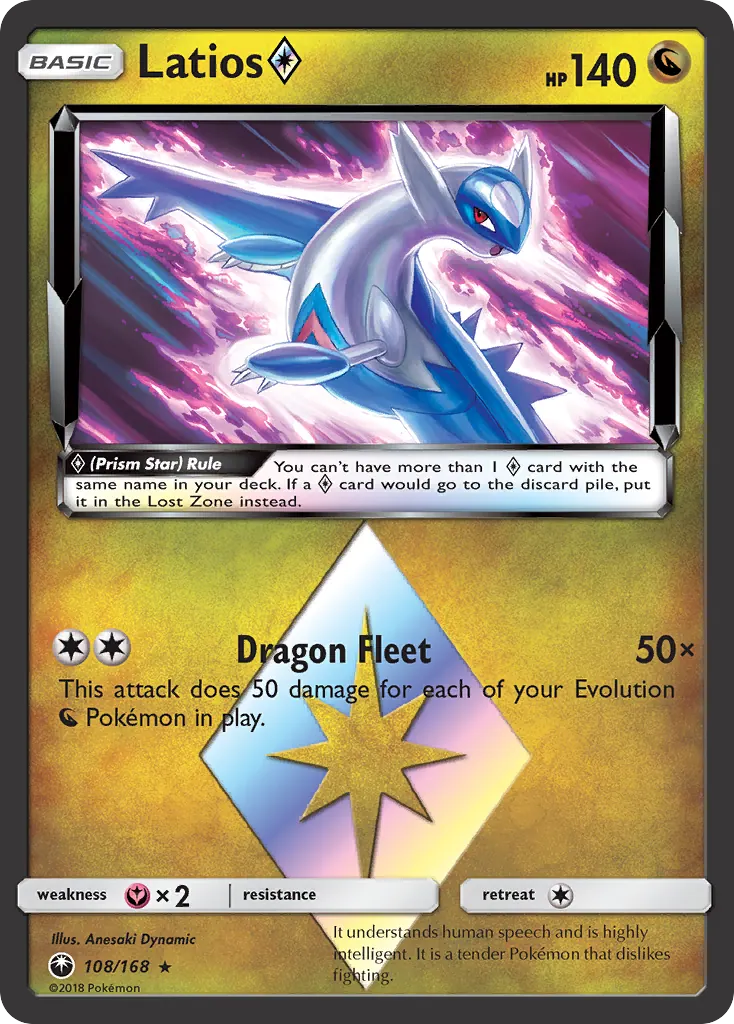
Buyers spent the first half of October clearing out the Prism Star cards from the 2018 Sun and Moon sets, and Latios Prism Star ran the hardest of the group. Its PSA 10 price went from $750, where it had sat since July, to $1,400 this month. The raw card barely budged on paper over the same stretch, and that gap turns out to be the most useful thing about the whole move. Elsewhere, a $7 reprint in 30th Celebration Classic Collection climbed 43 percent in ten days while the expensive cards in its own set were falling.
What's hot: Latios Prism Star (Celestial Storm #108/168)
Here is the PriceCharting grade grid for Latios Prism Star, pulled October 16. The PSA 10 read $750 in July, $750 in August, $750 in September, and $1,400 in October. The Grade 9 went from roughly $99 in September to about $127 now, and the Grade 8 from around $35 to $51.52. The blended ungraded figure, which is the one most people glance at, moved from $10.98 to $11.56 and told you nothing.
That last number is a trap, so it is worth saying what it is. PriceCharting's ungraded price is an average of sales over time, so on a card that reprices in two weeks it lags badly. The live board is where the truth sits. On TCGplayer right now Latios Prism Star has 49 listings, of which 20 are near mint English, covering 27 copies. The cheapest listing of any kind delivers for $40.10 and it is a Chinese copy. The first real English near mint copy costs $51.39 delivered. TCGplayer's own market price reads $66.49, with a $27.49 low that belongs to a played or foreign copy.
So the raw card went from the $10 to $15 range to roughly $51 to $66, depending on which listing you take, and the cheap PriceCharting number simply has not caught up.
Nobody is doing this because they suddenly wanted a Latios for a binder. They are buying raw copies to send to PSA, which is why Latias Prism Star is around $58.73 and Jirachi Prism Star around $71.21 on the same board. It is a grading trade, and grading trades are decided by the pop report, not by the hype.
Pull it and the picture changes fast. Latios Prism Star has 44 PSA 10s against 180 PSA 9s and 477 total graded, so 9.2 percent of submitted copies came back a 10. Seventeen more grades landed in the last thirty days. For context, only about 34 percent of English Pokemon cards get a PSA 10, so this card gems at roughly a quarter of the normal rate. A 2018 holo with a dark bordered frame is exactly the kind of card that gets capped at 9 on centring and edge wear, and "near mint" in a listing title says nothing about centring. We wrote the pre-grading checklist for this situation in how to tell if a card will PSA 10.
Now the arithmetic. A copy costs $51.39 delivered. PSA's Standard tier is $59.99 but caps insured value at $1,000, which sits under the $1,400 PSA 10, so the tier you actually need is Priority at $79.99. Add about $12 of shipping and insurance in both directions and you are roughly $143 into the card. eBay takes somewhere near 15 percent, so a 10 nets about $1,190, a 9 nets about $108, and anything 8 or below nets around $44. Using this card's own grade split, a miss averages about $71. That puts the break even gem rate near 6.5 percent against a lifetime rate of 9.2 percent.
Two and a half points of margin is not much room, and the gap between a PSA 9 and a PSA 10 here is about elevenfold, so every miss is close to a total loss on the fee. Priority also reads 70 to 80 business days on PSA's pricing page today, which is roughly four calendar months of holding the card while the price does whatever it wants.
There is a precedent for what it might do. This card spiked once before: the PSA 10 hit $496.88 in October 2025, then fell to $399.26 in November and $390.10 in December, giving back about 21 percent in two months before the next leg up. A card that has round-tripped a spike once can do it again.
Flipper's angle: if you already own raw copies with good centring, this is the window to submit them, because you bought in at the old price and the fee is the only cost you are adding. Buying at $51 today to chase a one month old $1,400 slab is a different trade, and a thinner one than it looks. We would not pay up for raw here.
Biggest gainer: Arceus VSTAR (30th Celebration Classic Collection #123/172)
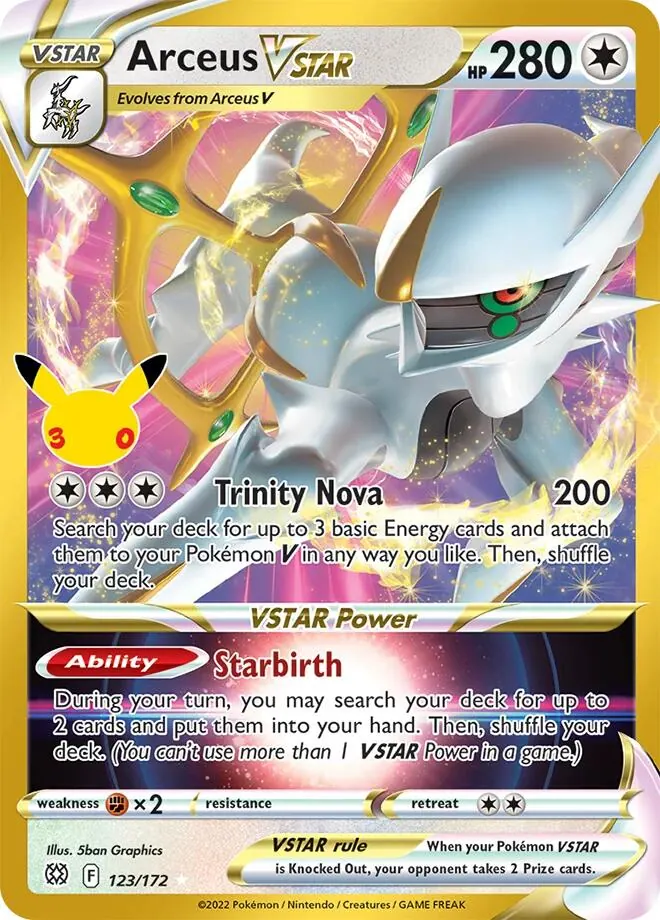
The stamped Arceus VSTAR reprint in 30th Celebration Classic Collection went from a $7.47 market price on October 7 to $10.65 on October 17, up 42.6 percent. What makes it worth writing about rather than ignoring is that the whole board moved with it: the low went $6.30 to $7.77 and the mid went $9.99 to $12.40. Most big percentage gainers are one lucky sale dragging an average around while the actual listings sit still, so we throw those out. This one passes.
The listings back it up. There are 62 of them, 59 near mint English, covering 75 copies, and the cheapest delivers for $11.00 with no foreign copies contaminating the bottom of the stack. The quoted market price sits slightly below that floor, which is what a real price looks like.
The catalyst is less tidy, and we would rather say so than invent one. Classic Collection is not rising as a set. Across the group, twelve cards are up and twelve are down over the same ten days, and the ones falling are the expensive ones: Lugia went from $203.24 to $183.47 and Charizard from $142.51 to $134.82. The ones rising are nearly all under $12. That shape usually means buyers are stepping down the price ladder within a set rather than new money arriving, which fits a release that hit shelves on September 16 and is now a month into the stretch where new set chase cards normally sag.
The comparison that should bother you is the original. Arceus VSTAR first printed in Brilliant Stars as #123/172 with the same 5ban Graphics artwork, and that card sells raw for about $6.16. The 30th Celebration version is the identical picture with a Pikachu 30 stamp on it, and it now costs roughly 73 percent more than the card it reprints. That premium is novelty, and reprints and originals do not price off each other the way people assume.
Grading it is not the answer either. The Brilliant Stars original has 1,102 PSA 10s out of 2,039 graded, a 54 percent gem rate, and the 10 sells for about $110.21. That is a respectable card to submit at a $6 entry. The Classic Collection printing has no PSA 10 comp yet at all, so you would be paying $11 and $79.99 to find out what the market pays, which is not a trade, it is a donation.
Flipper's angle: the move is real and you can sell into it, but there is nothing here to buy. If you opened Classic Collection product and have Arceus VSTARs sitting in a box, this is a better price than you will likely see in December.
What both moves have in common
Neither of these weeks was about cardboard. Latios repriced because people decided a graded copy was worth $1,400, and Arceus repriced because people decided a $180 Lugia was too expensive and went shopping further down the same set. In both cases the number that moved first was the one attached to a slab or to a buyer's budget, not to the card itself.
The practical takeaway is small and repeatable. Before you buy a raw card that just spiked, open its pop report and work out the break even gem rate the way we did with Latios above. It takes two minutes and it is the difference between a submission with a few points of edge and a lottery ticket with a $79.99 entry fee. Flipr does this arithmetic on every card in the app, but the method matters more than the tool.
Two predictions, logged so we can be graded on them later. First, Latios Prism Star's PSA 10 price on PriceCharting will read below $1,400 on December 15, because the move is one month old, it sits 87 percent above a level that held flat all summer, and this card gave back 21 percent after its last spike. Second, the delivered English near mint floor on Classic Collection Arceus VSTAR will be below today's $11.00 on December 15, because the set is still being opened and the top of it is already falling. Both are wrong if the number is flat or higher, and we will say so.
On that note, we scored ten older calls this week and got nine of them right and one badly wrong. The miss was Dragapult ex #165, which we named in August as the card whose graded premium would hold up best because it had held up best so far. Over the following two months it gave up more of its premium than any of the five cards we compared it against. Picking the card that has fallen least and calling it durable is a momentum read wearing a structural argument's clothes, and we will not make that one again. Last week's calls on the free Mewtwo promo and the stamped Armarouge are still open and come due in November.
Graded cards are speculative and illiquid, and none of this is investment advice.
Want to flip smarter, not harder?
Flipr's free toolkit surfaces the most profitable cards to grade and the spreads to arbitrage, refreshed every 30 minutes. Twelve tools, zero subscriptions.
Open FliprMore on PSA flipping
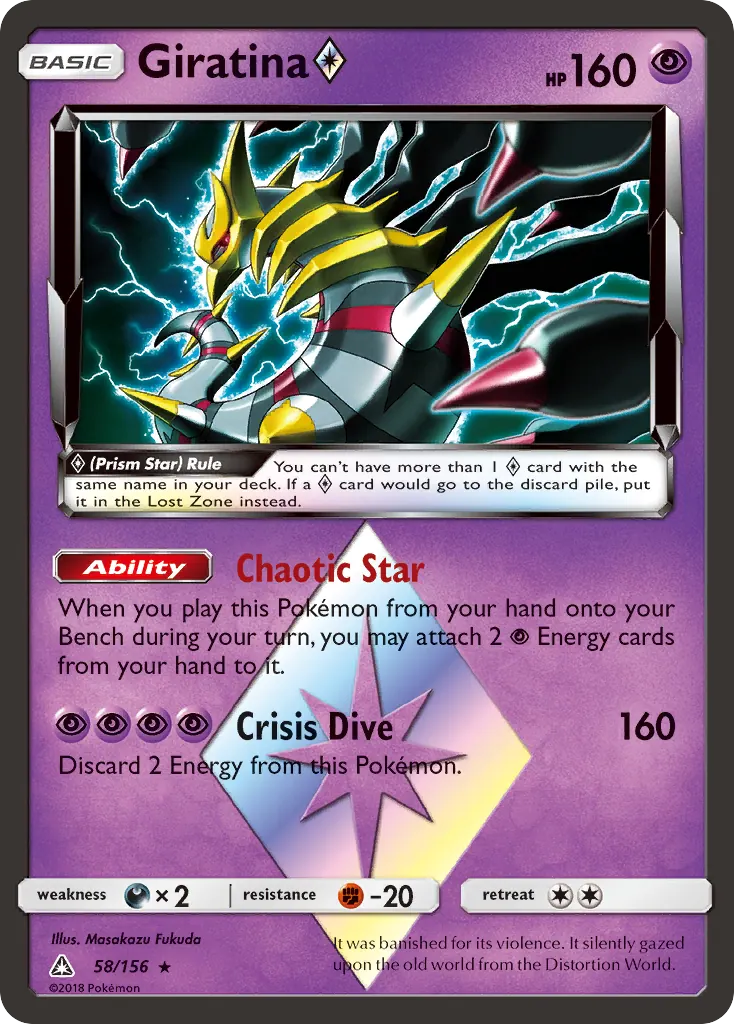
Giratina Prism Star PSA 10s Sold for $9,999, and the 30th Celebration Zeraora Promo Rose 44%
Giratina Prism Star 58/156 gems at 17.3% and two PSA 10s sold near $9,999 in three weeks. The 30th Celebration Zeraora promo rose 44% to $23.92.
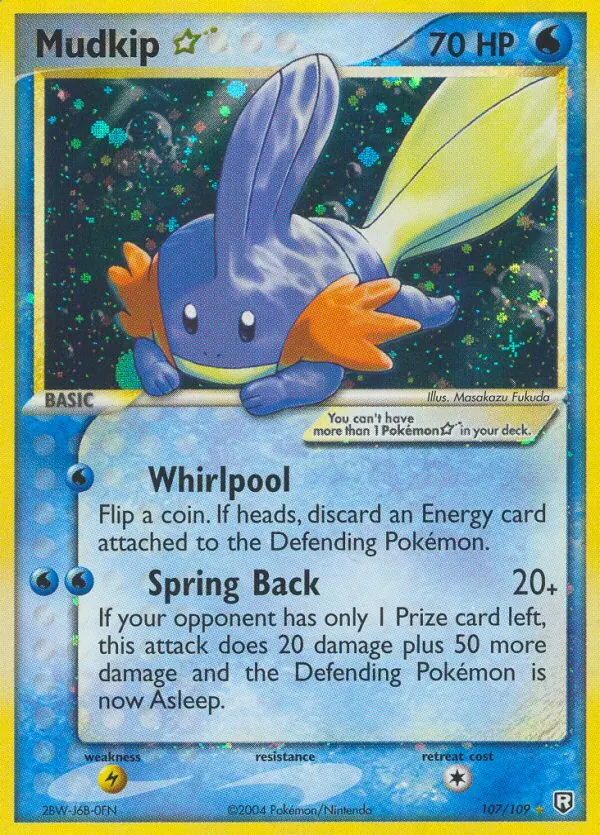
Mudkip Gold Star PSA 9s Sold for $45,044 This Week, and 30th Celebration Charizard Bounced 22%
Three Mudkip Gold Star PSA 9s sold between $45,044 and $47,100 in eight days while raw copies stayed near $3,000. Classic Collection Charizard rose 22%.
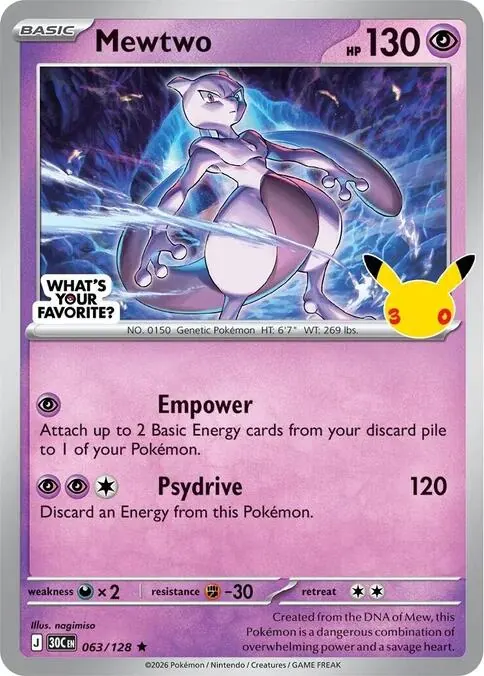
The Free Mewtwo Promo Is Selling for $14, and Armarouge's Stamped Promo Jumped 46% in a Week
Mewtwo 063/128 is free with a $15 purchase and resells near $14. The Armarouge What's Your Favorite stamp went from $42.01 to $61.19 in seven days.