
Do Pokemon Card Reprints Hurt the Original's Value?
Pokemon is reprinting Base Set Charizard for its 30th anniversary. Does that tank the 1999 original? We pulled the real prices. Mostly no, with one catch.
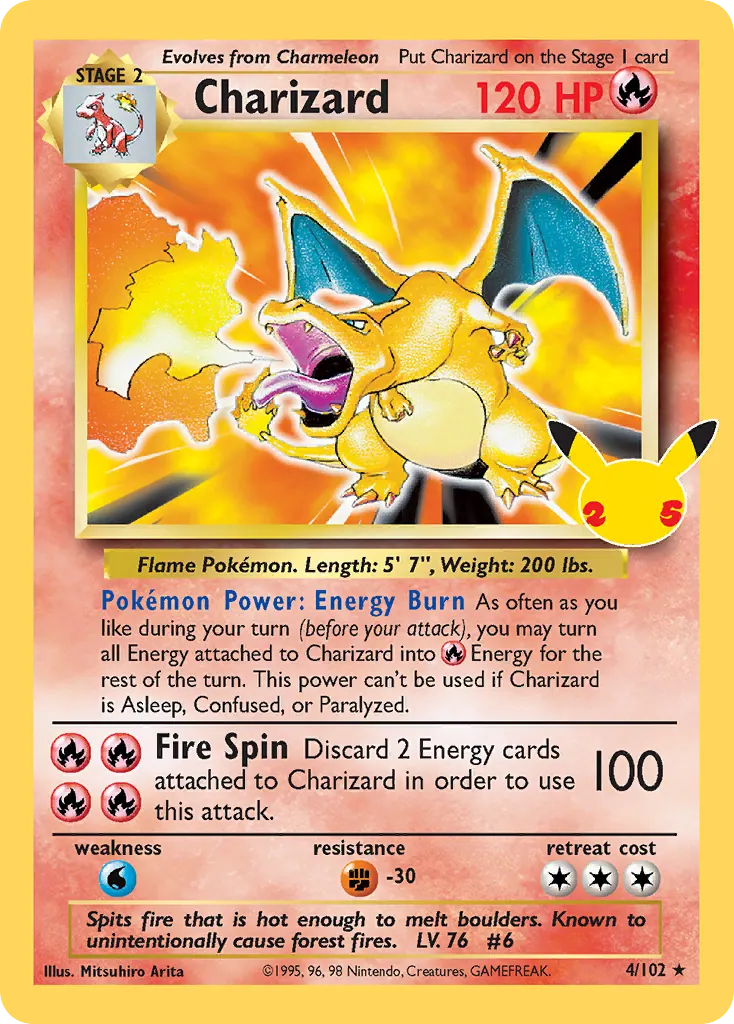
Pokemon just handed every collector who owns a chase original a reason to sweat. The 30th Celebration set, out worldwide September 16, 2026, reprints a batch of classic cards, and the two the Pokemon Company has confirmed by name are exactly the ones that make people nervous: Base Set Charizard and Pikachu & Zekrom GX from Team Up. If you are holding either original, the question writes itself. Does a shiny new reprint torch the value of the card you already own?
We have gotten this question in some form every week since the reveal. Here are the honest answers, each one checked against real PriceCharting numbers pulled today, July 6, 2026, not vibes.
Does reprinting a card lower the value of the original?
Usually no, as long as the reprint is clearly marked as a different card. The cleanest proof is that Pokemon already ran this exact experiment on this exact card.
Back in 2021, Celebrations reprinted Base Set Charizard in its Classic Collection: same Mitsuhiro Arita fire-breathing pose, sold in modern packs at a modern print run. Nearly five years later, here is where the two versions sit:
| Charizard #4 | Ungraded | PSA 10 |
|---|---|---|
| Base Set original (1999) | $381.55 | $30,100 |
| Celebrations reprint (2021) | $188.26 | $578.27 |
The reprint did not drag the original down. The two trade as completely separate assets, and the 1999 PSA 10 is worth roughly fifty times the reprint's. A collector paying $30,000 for a Base Set Charizard is not buying the picture. They are buying a 1999 print run, a fixed and shrinking supply, and provenance. A 2026 reprint cannot manufacture any of that. It just makes the art available to people who were never in the market for a five-figure slab.
That is the core idea: the value of a true vintage chase card is scarcity and history, not the illustration. A reprint copies the illustration. It cannot copy the scarcity.
Then why did my original jump when the reprint was announced?
Because attention is a short-term drug, and reprint news is a big dose of it.
When Pikachu & Zekrom GX got named as a 30th Celebration reprint, the 2019 Team Up original did not fall. It spiked. It ran from about $40 in early June to $130 to $140 within roughly ten days as the reveal put the card back in everyone's feed. We flagged that move at the time as a hype pulse rather than a fundamentals shift, and told readers to sell into it, not chase it.
Here is that same card today: $62.93 ungraded on PriceCharting. The pump gave itself back, and then some. Anyone who sold the spike did well. Anyone who bought the top on the theory that "the reprint makes the original more iconic" is now underwater.
The lesson is that a reprint announcement often lifts the original for a few weeks on pure attention, then the number drifts back toward where fundamentals actually sit. That temporary spike is a window to sell, not a reason to buy. It is the same "is this gap real or just noise" question we worked through when we separated real arbitrage from mirages, except here the noise is emotional instead of structural.
Which reprints actually do hurt the original?
Two situations genuinely dent the card being copied.
The first is a reprint that is hard to tell apart from the original. If the new print carries no distinct stamp, no new set marking, and nothing to separate it on sight, the market cannot cleanly split the two and doubt about authenticity drags the original down. This is rare with modern anniversary sets, because Pokemon deliberately marks them. Every 30th Celebration card wears a 30th Anniversary Pikachu logo and its own set stamp, precisely so the reprint and the original stay distinct.
The second is when the card's value was mostly functional, not collectible. If people wanted a card because they needed it to play, and a cheap reprint floods the format with legal copies, the original softens toward the reprint. This is why the format detail matters: the 30th Celebration reprints are not Standard-legal, so they add zero tournament supply. They are collector items competing on nostalgia, not on playability, which protects the originals.
Should I sell my original before the reprint drops?
It depends on which kind of card you hold.
If you own a graded, blue-chip vintage original, a PSA 10 Base Set Charizard being the obvious case, there is nothing to do. The reprint does not touch it, and selling out of fear just hands your slab to someone who understands that. Hold.
If you own a mid-tier modern original that already spiked on the announcement, the way Pikachu & Zekrom GX did, the answer flips. That spike is your exit. The reveal handed you a temporary bid you would not otherwise have had, and once the new set is in hand and attention rotates to the shiny 30th version, the original tends to give the pump back. Watch daily sold depth, not asking prices: when the clears thin out, the window is closing. And when you do sell a graded copy, list it where the fees and the audience actually favor you.
Is the reprint itself a good flip?
Rarely at launch, for the same reason every new set is a bad launch-week buy. A 30th Celebration Charizard in September will be at its most expensive the week it releases, when supply is thinnest and hype is loudest, then slide as cases get cracked. That is the supply wave every fresh set runs, and a hyped anniversary product is not exempt from it.
The grading math is thinner than it looks on a reprint, too. Modern foils hit PSA 10 far more often than vintage, so the PSA 10 population climbs fast and the premium over a raw copy compresses. The Celebrations Charizard PSA 10 at $578 against a $188 raw is a real multiple, but nothing like the vintage ladder, and you are paying the grading fee into a pop report that keeps growing. Before you submit any modern reprint, run the same PSA 9 versus PSA 10 gap math you would on any set card, because on a high-pop reprint that gap is the whole trade.
How do I tell the reprint from the original at a glance?
Three reliable tells:
- The anniversary stamp. The Celebrations reprints wear a 25th Anniversary Pikachu logo in the corner of the art box; the 30th Celebration cards wear a 30th version. No original has one. This is the fastest and most reliable check.
- The card back and stock. Flip it. A 1999 Base Set card has the vintage back and older stock, while every anniversary reprint uses a modern back. This is the giveaway a seller cannot hide if you ask for a back photo.
- The numbering trap. Do not lean on the card number. The Celebrations Charizard kept the original 4/102, so a matching number proves nothing on its own. The stamp and the back are what settle it.
If a listing photo hides the anniversary stamp and the seller will not show the back, assume there is a reason.
The takeaway
A reprint copies a picture. It does not copy a print year, a shrinking supply, or twenty-five years of provenance, which is where a true original's value actually lives. Base Set Charizard survived a 2021 reprint without a scratch and will survive the 2026 one the same way. The only real move a reprint hands you is a short-term one: when the announcement pumps a modern original, that spike is an exit, not an entry. Sell the noise, keep the blue chips, and do not let a new stamp talk you out of a card whose entire value is that it can never truly be reprinted.
Want to flip smarter, not harder?
Flipr's free toolkit surfaces the most profitable cards to grade and the spreads to arbitrage, refreshed every 30 minutes. Twelve tools, zero subscriptions.
Open FliprMore on PSA flipping
Why New-Set Chase Cards Drop in Month Two
New-set Special Illustration Rares carry a launch premium that fades fast. We called Mega Greninja ex at $500. It is $323 now. Here is how to time the drop.
PSA 10 Pokemon Card Prices Are Dropping Faster Than Raw Cards
We re-checked eight cards we covered since May. Raw prices fell about 14%, PSA 10 prices fell about 19%, and the reward for grading shrank on six of the eight.
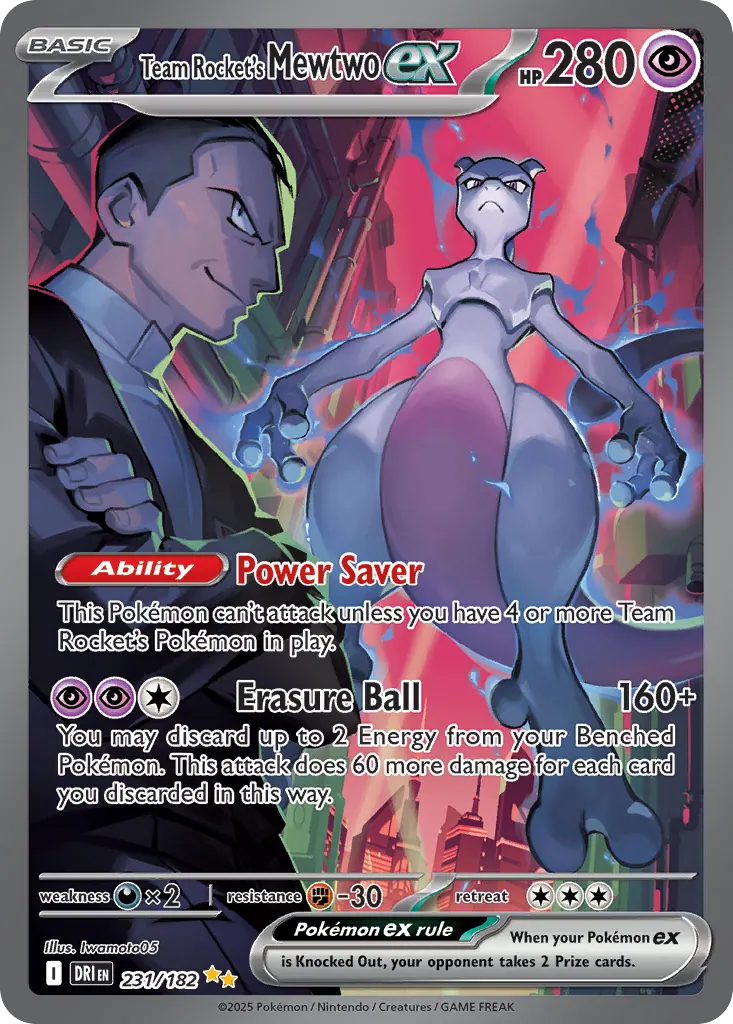
Destined Rivals Booster Box Prices Are Riding a Reprint Pokemon Has Not Confirmed
Destined Rivals booster boxes are trading on reprint talk Pokemon has never announced. We log the real sealed prices and predict the set and Team Rocket's Mewtwo ex will be cheaper by October 15.