
PSA 10 Pokemon Card Prices Are Dropping Faster Than Raw Cards
We re-checked eight cards we covered since May. Raw prices fell about 14%, PSA 10 prices fell about 19%, and the reward for grading shrank on six of the eight.
Back on May 31 we told anyone holding a clean Mega Lucario ex #179, the Special Illustration Rare, to grade it. The math was easy to like. Raw copies were selling for $202.50, a PSA 10 was selling for $537.79, and the gap between those two numbers paid for the grading fee several times over. This morning, August 17, that same raw copy is $194.97 and the PSA 10 is $395.00. The raw card barely moved, but the slab lost almost 27%.
We wanted to know if that was one unlucky card, so we went back through the cards we have covered since May, eight in all, and pulled the same PriceCharting numbers we quoted the first time. It was not one unlucky card: on six of the eight, the PSA 10 price fell harder than the raw price. The reward for grading these cards shrank while they would have been sitting in PSA's queue.
The eight cards, then and now
| Card | Written up | Raw then / now | PSA 10 then / now | PSA 10 vs raw, then / now |
|---|---|---|---|---|
| Mega Lucario ex #179 | May 31 | $202.50 / $194.97 | $537.79 / $395.00 | 2.66x / 2.03x |
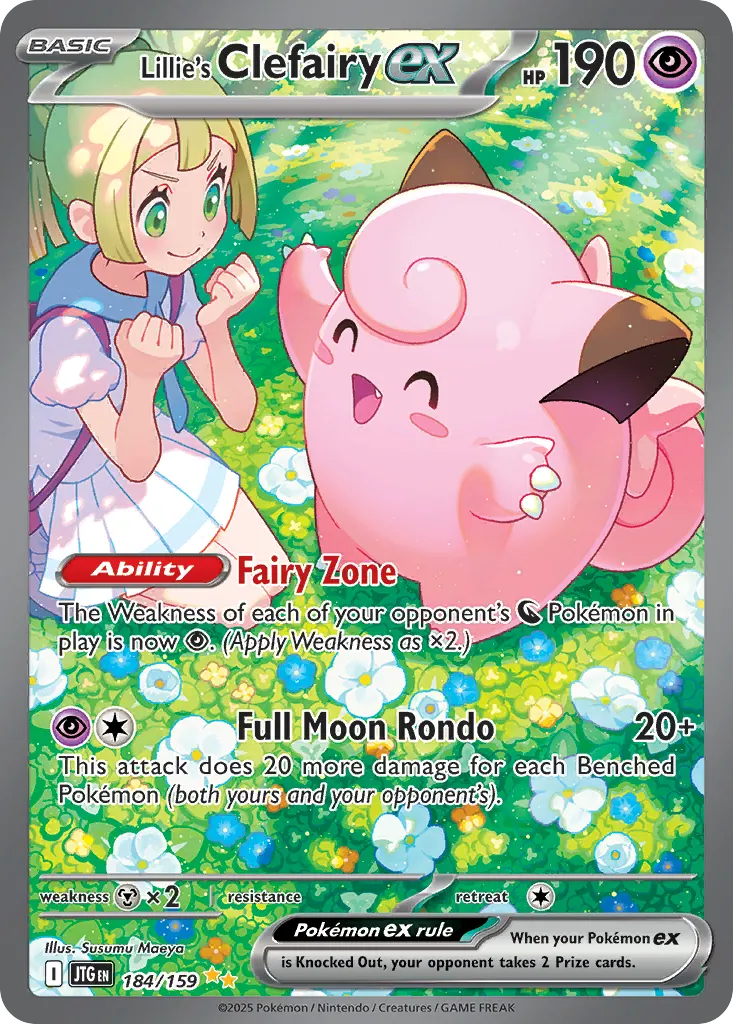
| Lillie's Clefairy ex #280 | May 31 | $215.08 / $165.51 | $690.00 / $372.82 | 3.21x / 2.25x |
| Ash-Greninja-EX #XY133 | Jun 4 | $29.46 / $24.64 | $2,143.27 / $9,760.36 | 72.8x / 396x |
| Dragapult ex #165 | Jun 11 | $112.31 / $102.10 | $269.64 / $238.84 | 2.40x / 2.34x |
| Pikachu & Zekrom GX #33 | Jun 11 | $73.11 / $46.40 | $1,089.00 / $650.00 | 14.9x / 14.0x |
| N's Zoroark ex #185 | Jun 18 | $48.09 / $42.63 | $180.06 / $149.00 | 3.74x / 3.50x |
| Mew ex #232 | Jun 25 | $940.01 / $941.70 | $3,850.00 / $3,062.22 | 4.10x / 3.25x |
| Mega Gengar ex #284 | Jul 2 | $1,234.25 / $1,027.16 | $2,500.00 / $2,175.00 | 2.03x / 2.12x |
Every number is from PriceCharting, the ungraded price and the PSA 10 price, pulled once on the day we covered the card and again on August 17, 2026.
The timing is the point. When we last read PSA's pricing page on August 3, the cheapest tier was Regular at $79.99 with a stated turnaround of 40 to 50 business days, which works out to roughly eight to ten weeks. That is about the length of these windows. If you read one of our May posts, agreed with it, and mailed your card that same week, the slab arriving back at your door right about now is worth the second number in each column, not the first.
PSA 10 prices fell almost twice as fast as raw prices
Across the eight cards, raw copies fell about 14% at the median and PSA 10 copies fell about 19%. Some of that is just a slow summer, since everyone is waiting on the 30th Celebration set on September 16 and prices drift when everyone is waiting.
The part that costs you money is how those two prices relate, because that relationship is the whole reason to grade a card. Take Lillie's Clefairy ex #280. At the end of May a PSA 10 was worth about 3.2 times a raw copy, $690.00 against $215.08. Today it is worth about 2.25 times a raw copy, $372.82 against $165.51. Nothing about the card changed, but the payoff for putting it in plastic is roughly a third smaller, and anyone who mailed one in early June spent that entire slide standing in line.
Mew ex #232 shows the same thing even more cleanly, because its raw price did nothing at all. It was $940.01 in late June and it is $941.70 today. Watching only the raw price, you would swear the market forgot the card existed for seven weeks. Meanwhile the PSA 10 fell 20%, from $3,850.00 down to $3,062.22.
Mega Gengar ex #284 looks like it bucked the trend, but only because its raw price fell even faster than its PSA 10 did, 17% against 13%. Both prices dropped, and nobody grading that card won anything.
The exception: Ash-Greninja-EX went up 355%
Ash-Greninja-EX #XY133 went the other way, hard. When we covered it on June 4, a PSA 10 was $2,143.27. Today it is $9,760.36, up 355% in ten weeks, and it is the worst call we made this year because we told readers not to chase it.
The reason it could run like that is supply. It is a 2016 promo, so every copy that will ever exist already exists, and when attention hit the card the price had nowhere to go but up. Nearly everything else in our table is either still in print or came out of a set that was printed into the ground, and every new pack opened adds another potential PSA 10 to the pile. Before you bet on any card's graded price holding, ask whether more copies are coming. We walked through the same question in what a reprint does to the original card.
Our price predictions keep missing low
Re-checking the table also closed out our Mega Gengar call from July 2, and it taught us the same lesson a third time. The direction was right: we said the card would not keep running, and that selling raw copies into the attention beat grading and holding. The price we named was wrong. We guessed the raw card would settle between $1,100 and $1,300, and it fell straight through the bottom of that range to $1,027.16.
That makes three named prices in a row that broke. We gave N's Zekrom a $110 floor and it drifted to $96.83. We gave Pikachu & Zekrom GX a landing zone of $90 to $110 and it landed at $50.63. When a card's price is riding on attention instead of scarcity, it does not stop at a round number, it just keeps sinking until it finds whatever the card was worth before people started talking about it. So we are done naming exact floors. We will keep calling the direction, the action to take, and what would prove us wrong.
What to check before you grade a card
Two habits fall out of these ten weeks.
First, price your slab at what it will be worth when it comes back, not what it is worth today. On modern cards that are still in print, the honest assumption from this sample is lower, so knock about 20% off today's PSA 10 price and ask whether grading still pays at that number. If the math only works at today's price, skip the card.
Second, look at the PSA 9 price just as hard as the PSA 10 price, because a 9 is where a miss lands. On three of these eight cards, a PSA 9 now sells for less than a raw copy:
- Mega Lucario ex #179: $191.25 in a PSA 9, against $194.97 raw
- Mew ex #232: $920.00, against $941.70 raw
- Mega Gengar ex #284: $957.91, against $1,027.16 raw
Dragapult ex #165 is close enough, $106.39 against $102.10, that eBay fees eat the difference. Get a 9 on any of those and you paid $79.99 to make your card worth less than the one you mailed in. We wrote up that exact trap in what a PSA grade does to a card that does not gem.
None of this says stop grading. It says stop grading off a screenshot of today's prices. A huge gap between the raw price and the PSA 10 price usually means the 10 is hard to hit in the first place, which we covered in the multiplier trap, and waiting ten weeks for the slab adds a second problem on top: the price you are chasing keeps moving while you wait. Watching both numbers is most of what Flipr is for, and we built it partly because we made this exact mistake on Mega Lucario in May.
We will re-check all eight cards in mid-October and publish the numbers, good or bad.
Want to flip smarter, not harder?
Flipr's free toolkit surfaces the most profitable cards to grade and the spreads to arbitrage, refreshed every 30 minutes. Twelve tools, zero subscriptions.
Open FliprMore on PSA flipping
Only 34% of English Pokemon Cards Get a PSA 10
We read the PSA population report on September 21. Across 20.5 million graded English Pokemon cards, 34.2% came back a 10, and the rate swings hard by set.
Buy the PSA 10 or Grade Your Own? The $79.99 Math
PSA paused its Value tiers, so grading now starts at $79.99. We ran the break-even gem rate on seven live price grids to find when buying the slab wins.
Grading a Vintage Pokemon Pack Usually Makes It Worth Less
We read PSA's pack price list and PriceCharting on September 29. On four vintage Pokemon booster packs, most grades sell for less than a raw pack.