
Gold Star Rayquaza Sold for $1.02 Million, and Lugia BREAK's Price Jumped to $44.63
A Gold Star Rayquaza became the first English Pokemon card to clear $1 million on August 28, and Lugia BREAK climbed from $24.92 to $44.63 on a reprint rumor.
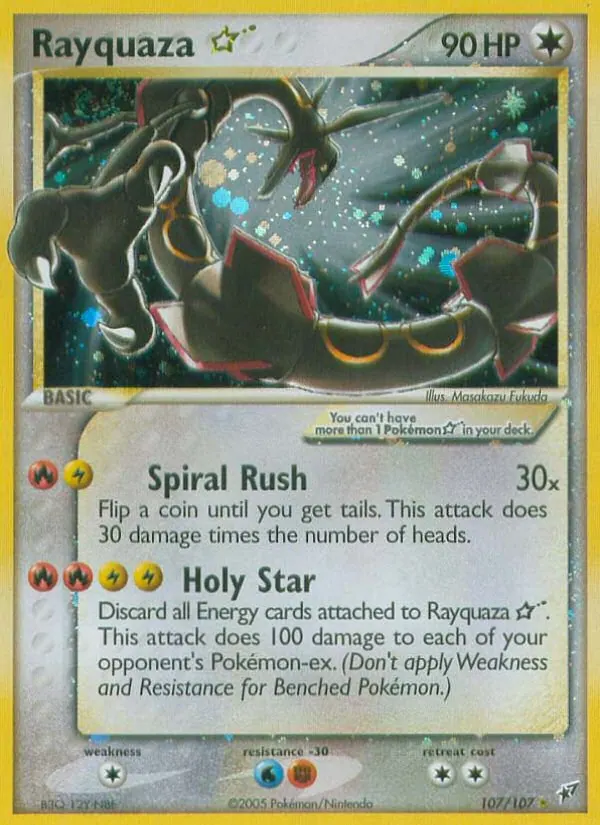
Fanatics Collect sold a Gold Star Rayquaza for $1,020,000 on August 28, making it the first English Pokemon card to clear a million dollars. A week later it is still the loudest thing in the hobby, and searches for Gold Stars have gone up with it. The week's biggest actual price move sits a long way down the price ladder, though. Lugia BREAK has gone from about $25 to about $45 since early August, on a reprint rumor about a completely different card.
What's hot: Rayquaza Gold Star (EX Deoxys #107)
The card is a 2005 EX Deoxys Holo Rayquaza Gold Star #107, and the copy that sold is the only one CGC has ever graded Pristine 10. It ran in Fanatics Collect's August Premier Auction on August 28, drew 35 bids, and closed at $1,020,000 with the buyer's premium included. That cleared the old English record by $65,200. The previous holder was the PSA 10 First Edition Base Set Charizard pulled during Logan Paul and Ken Goldin's 2021 box break, which sold for $954,800 in February. The all time Pokemon record is still Logan Paul's Japanese Pikachu Illustrator at $16.492 million, so what moved here is the English ceiling.
Gold Stars arrived in 2004 and turned up at roughly one per two booster boxes, and EX Deoxys had factory edge wear baked into the print run. CGC says that out of more than 250 copies it has graded, 12 came back Gem Mint 10 and exactly one earned the Pristine. PSA's numbers say the same thing from the other side. There are 1,908 English copies in PSA's population, 237 of them PSA 9 and only 47 PSA 10, which works out to a gem rate near 2.5%. PSA is still adding around 45 new grades a month to that pile.
Then there is the part the headline hides. PriceCharting's blended ungraded price for the card read $9,611.81 on July 1 and $8,392.94 on September 1, so an ordinary raw copy has drifted down through the entire record setting run. The PSA 10 line has sat at $365,750 since July without moving. Grade 9 went from $36,257.85 in June to $62,000 in July to $82,637.50 in August, and it has been flat there for a month. The ladder underneath the record has not followed the record up.
So what should a flipper actually do here? Almost nothing, unless you already own one. A raw copy costs $8,392.94 at last read, the gem rate is 2.5%, and PSA's Regular tier only insures up to $1,500, so you would be paying your way up through the expensive tiers before you even started. The reason to care is what the sale says about the top of the vintage market: serious money is paying for the single best copy of a card and leaving the merely excellent copies where they were. That is the same shape we wrote about in why a huge PSA 10 multiplier is usually a trap. The jump from $82,637.50 at Grade 9 to $365,750 at PSA 10 is not free money sitting on a table, it is the market pricing in how rarely anybody hits the 10 on this card.
Biggest gainer: Lugia BREAK (XY Fates Collide #79)
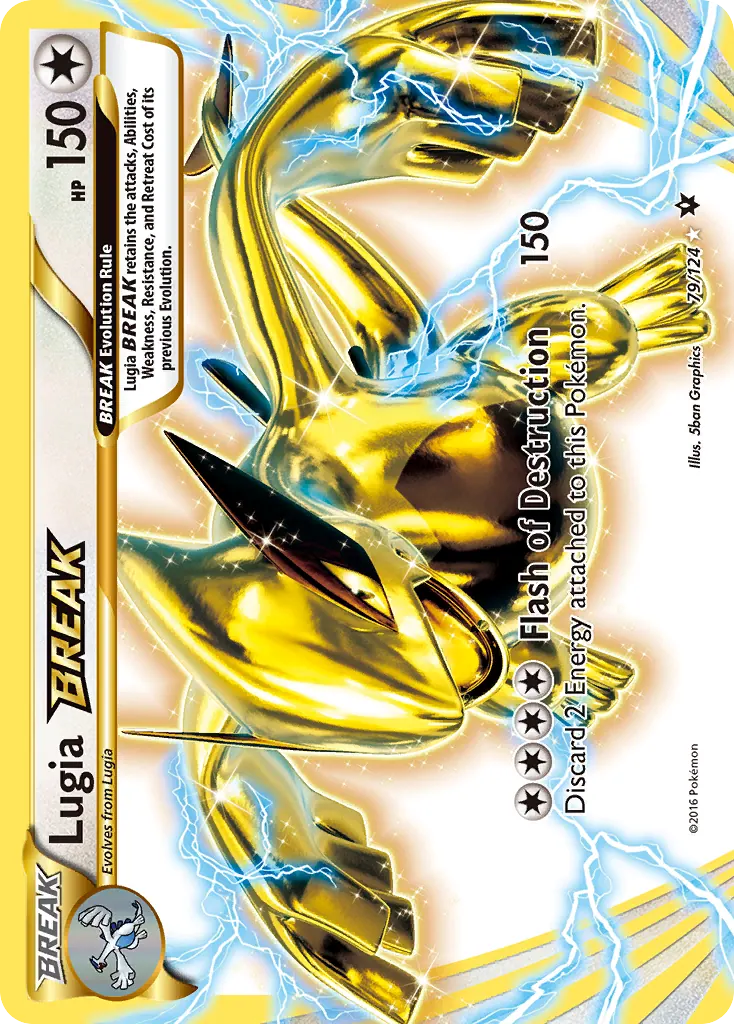
TCGplayer's own price trends report, published September 1, has Lugia BREAK moving from $24.92 to $44.30 across August, a climb of 77.7%, with a burst of buying on August 9. We pulled TCGplayer's live numbers today and the card reads $44.63 market with the cheapest Near Mint English copy at $43.00 delivered, so the move held instead of snapping back. The board carries 112 listings, 17 of them Near Mint English, which is a real market rather than three sellers sitting on an empty shelf.
The catalyst is the 30th Celebration set, which ships worldwide on September 16 and carries 30 anniversary stamped reprints of classic cards. Only six of those thirty were officially confirmed as of late August. Community reprint lists have had Greninja BREAK on them since June, and leaked pack openings in August showed a Greninja BREAK with the gold anniversary border, though Pokemon has still not confirmed it. That was enough to put the whole BREAK mechanic back in front of collectors, and the money went looking for the prettiest BREAK card that was not the one in the rumor. A full panel gold foil Lugia from 2016 fits that description neatly. We covered the other end of this same trade back in June when Greninja BREAK itself jumped 28%, and that card has held its gains since.
Whether the run keeps going is a different question. PriceCharting's blended figure, which averages in played copies, went $18.43 on July 1 to $27.33 on August 1 to $28.15 on September 1, so the sharp part of this is already a month old. The graded rungs have started ticking the other way. Lugia BREAK's PSA 10 read $733.14 in July, $835 in August and $793 this month, and its Grade 9 came off $95.50 to $91.27 over the same stretch. That is a pattern we keep running into, where the raw price holds while the graded comps roll over first.
The grading arithmetic is the awkward part, because on today's numbers it works. A Near Mint copy costs $43.00 delivered, PSA's Regular tier is $79.99 with Value services still paused, so you are all in around $123. A PSA 10 at $793 nets roughly $674 after eBay takes its cut, and a PSA 9 at $91.27 nets about $78, which means you only need to hit the 10 on about 8% of submissions to come out ahead. PSA has graded 1,763 English copies and 524 of them are 10s, a lifetime rate close to 30%. Regular turnaround is running 70 to 80 business days right now, so a card mailed today lands back in your hands in late December or January, long after 30th Celebration is on shelves and the rumor has resolved. We have watched that gap eat the profit before, both in what missing a 10 really costs and when we tracked eight cards whose PSA 10 prices fell faster than their raw copies.
What both moves are telling you
The two halves of this week are the same market behaving in opposite ways. One buyer paid a million dollars for a Rayquaza that does not exist twice, and every ordinary copy of that card got slightly cheaper while it happened. Several hundred small buyers pushed a $25 Lugia to $45 on a rumor, and the listing board is deep enough to prove they were real buyers rather than one seller relisting.
Here are our calls, and we log both so a future post can grade them. On Rayquaza Gold Star we expect the record to stay a story about one slab: by the end of October, PriceCharting's Grade 9 should still be near $82,637.50 and the raw should still be under $10,500. On Lugia BREAK we expect the raw price to give back a meaningful share of its run once 30th Celebration is actually in people's hands, and we would sell into the current $43 to $45 board rather than submit into a four month queue. If Pokemon confirms the Greninja BREAK reprint and Lugia BREAK is still above $45 at the end of October, we were wrong about that one. We will say so.
We can start with one we already got wrong, because it is this same mistake pointing the other way. On June 22 we said Mega Greninja ex would stop falling and hold roughly $260 to $340 after its launch slide, and we used it as the example in our piece on month two chase card drops. It kept falling. PriceCharting reads $187.50 today and the PSA 10 dropped from $1,362.50 to $491.93, a much steeper fall than the raw price took. Being the set mascot buys a card a higher floor than its neighbours get, and that is the whole of what it buys.
Want to flip smarter, not harder?
Flipr's free toolkit surfaces the most profitable cards to grade and the spreads to arbitrage, refreshed every 30 minutes. Twelve tools, zero subscriptions.
Open FliprMore on PSA flipping
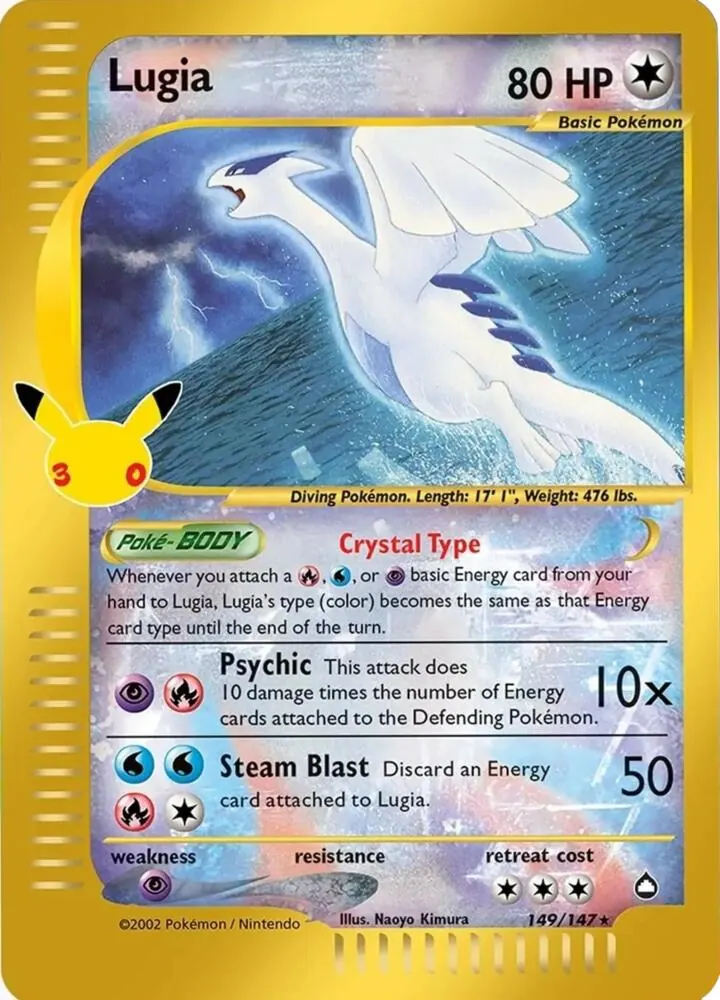
Crystal Lugia Reprint Price Opened at $251, and Fezandipiti ex Jumped 32% in a Week
The 30th Celebration Crystal Lugia asked $1,300 in presale and sells for $251. Fezandipiti ex rose 32% in both of its printings. Here is what we would do.
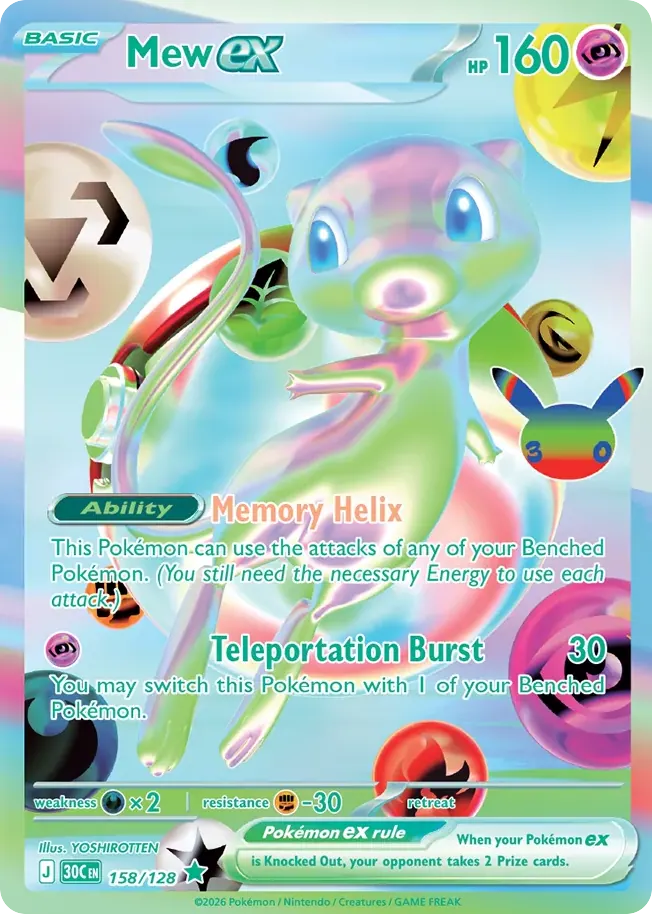
30th Celebration Mew ex Dropped to $157.94 on Launch Day, and Alolan Vulpix V Doubled
The Futuristic Rare Mew ex was asking $1,808.25 on presale and traded at $157.94 a day after 30th Celebration launched. Alolan Vulpix V rose 92% in a month.
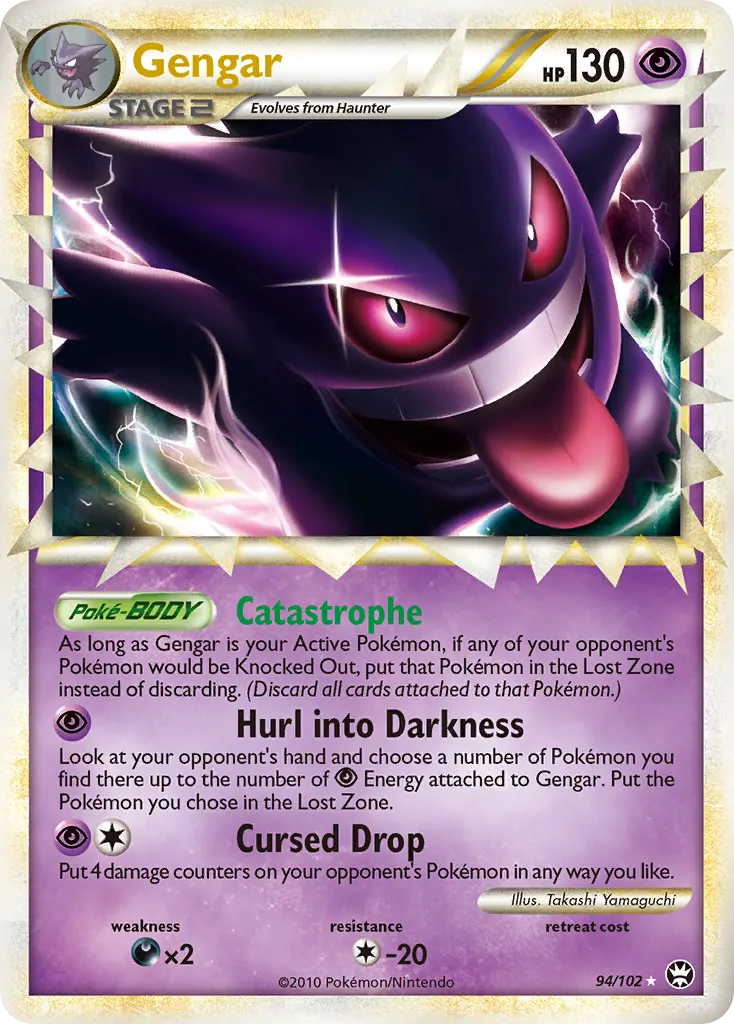
Gengar Prime Is in the 30th Celebration Classic Collection, and Prize Pack Psyduck Jumped 52% in a Week
Gengar Prime, HS Triumphant 94, is a confirmed 30th Celebration reprint with a $16,563 PSA 10, and the Prize Pack Psyduck 039/217 rose 52% in a week.